This website will dive into the amazing phenomenon of music and what it can bring to people when they experience it. There will be multiple
sections covering different aspects of music, including the discussion of poem similarities, how it connects to people's emotions, and how it brings
both audible and visual enjoyment for the world.
Music is the a universal language that can touch anyone in the world. It has the ability to convey emotions, tell stories, and connect
people in ways that words alone often cannot. A single song, rhythm, or melody can evoke feelings of happiness, sadness, excitement, and
even nostalgia. Depending on whether it's a relaxing flow from a Lana Del Ray song or the loud roar of a Journey song, music makes it way
down to the heart of a person, and it can express emotions that are difficult to articulate normally. It can be a form of comfort for a
single individual, and a form of connection for all people from around the world.
In addition, the complexity and overall composition of music makes it endlessly fascinating. The mixing of multiple different harmonies, melodies,
rhythms, lyrics, and singing voices paint their own canvas that captivates people in a way that no other art form does. A song can also be interpreted
in many ways by different people, making the possibilities for music to be limitless, and for each type of music to be enjoyed by anyone. Without realizing
it, music transports people into different times and places in their lives, and it can bring out a part of themselves that they didn't know was there before.
Poems/Lyrics
Poems and songs are similar in that both are powerful forms of artistic expression, with the key difference being that songs incorporate music.
Both forms of art aim to draw out emotions and deep-rooted feelings, and they both tell stories and communicate thoughts through their words or
lyrics. Their structure on paper also display similarities between the two work types. For example, pauses between stanzas in poems are able to
visually represent the pauses heard in songs or to tell a person when the singer is moving to the next verse of the song. Repetition is also used
in both poems and songs, but in different ways. Songs use melodies and instruments to carry their lyrics in a musical way, and poems use literary
devices like alliteration and rhyming to convey a sense of musicality within the format.
Furthermore, both songs and poems may communicate their message or themes through devices like symbolism, metaphors, similes, imagery, hyperbole,
and many more. These elements are helpful when it comes to individuals painting a picture in their head so that the idea is easier to grasp. This
can also simplify complex/abstract ideas down so that they are more relatable to the person experiencing it, and it's easier for them to connect
emotionally. Sometimes it can be difficult trying to pick up on the hidden meanings in these art forms, so it's important to take note of these
several elements when listening to a song or reading a poem.
Poem Examples:
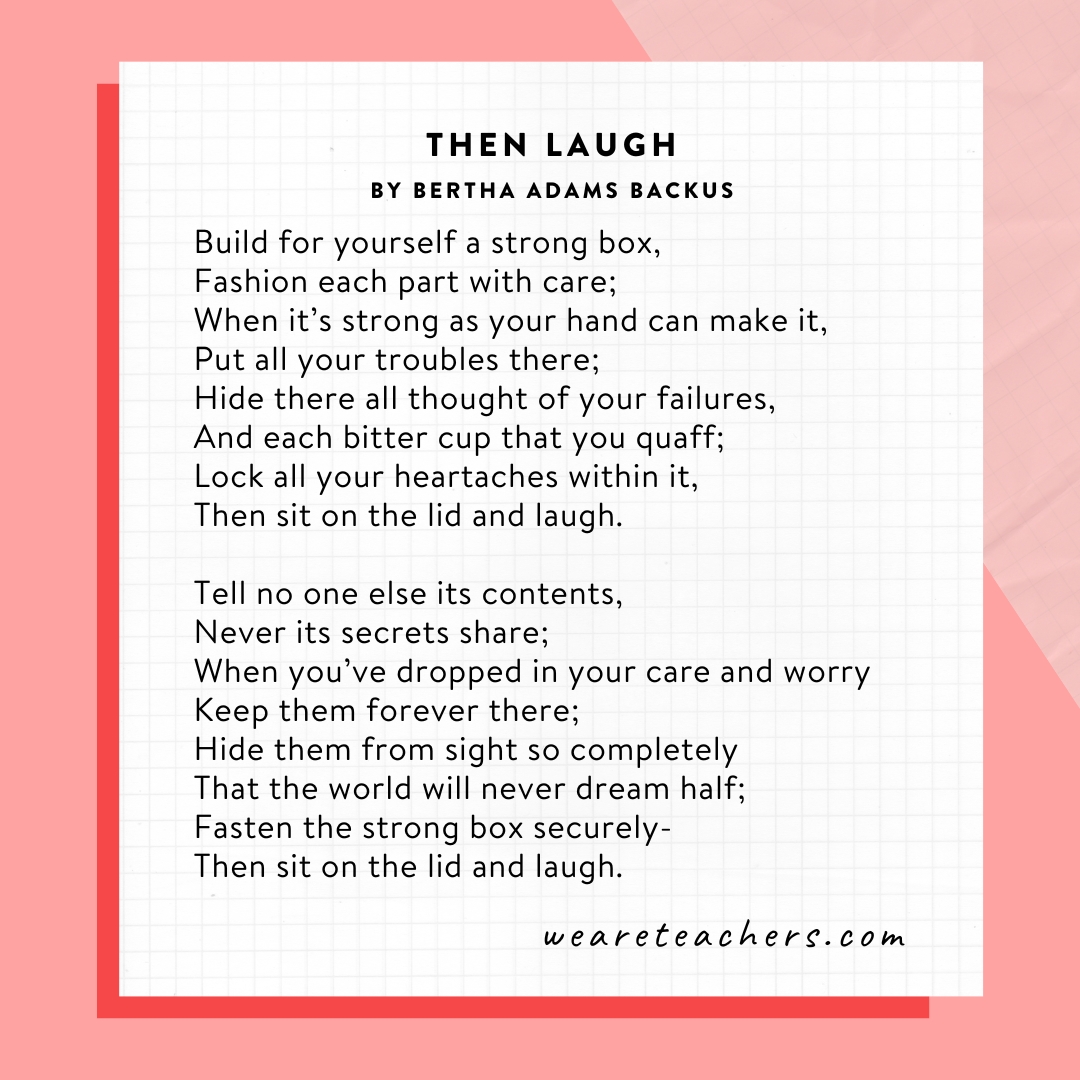
Bertha Adams Backus - Then Laugh
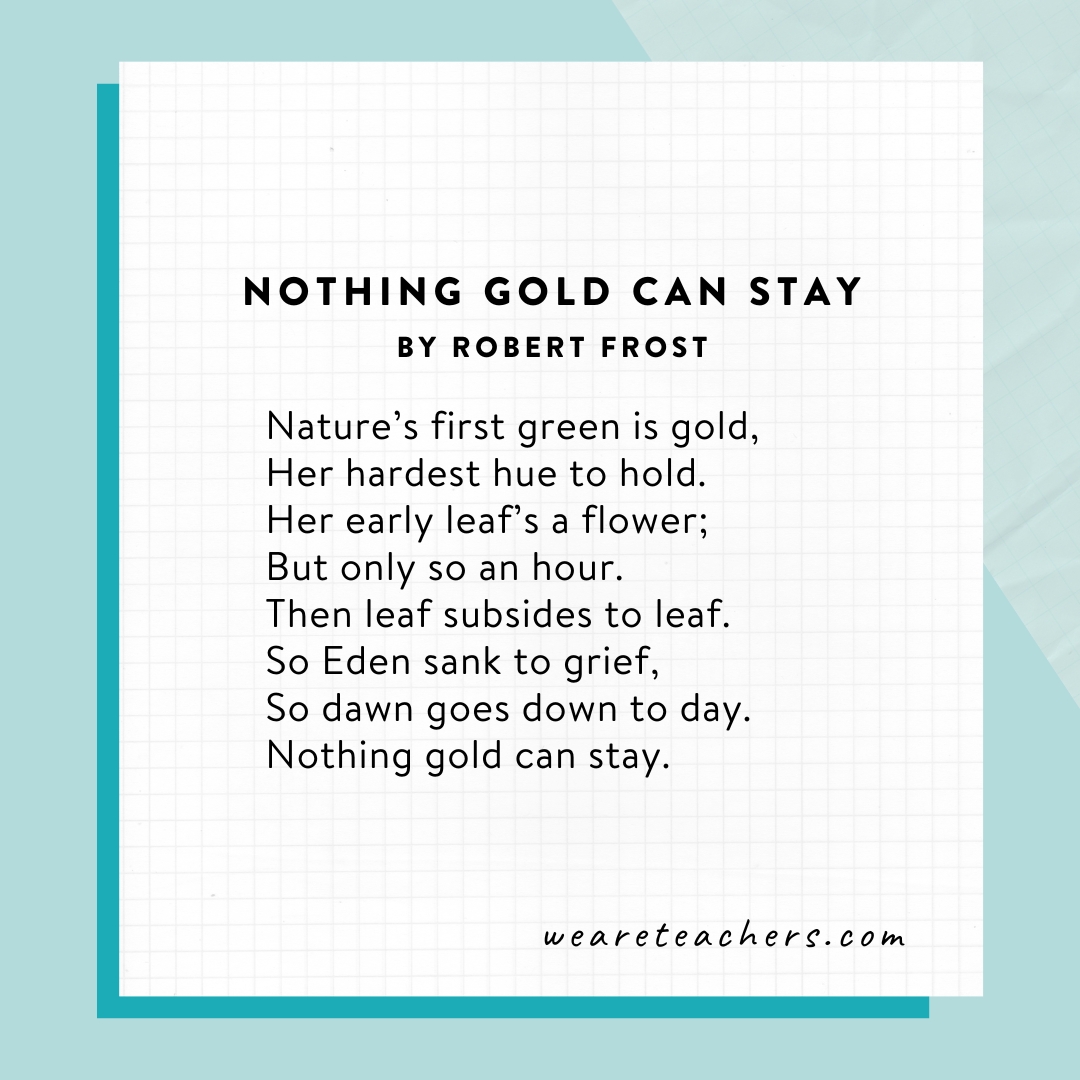
Robert Frost - Nothing Gold Can Stay
This is a poem by Bertha Adams Backus called Then Laugh. The main purpose for the poem is to convey the deep resilience of the
human spirit despite life's many hardships and challenges. In addition, it suggests that the reader should use laughter as healing response,
while making sure they don't just avoid their problems altogether.
This is a famous poem by Robert Frost called Nothing Gold Can Stay. It reflects the fleeting nature of youth and innocence as its
main theme throughout. This idea is not expressed simply, however. There are several elements of imagery, metaphors, and symbolism to convey
this theme. For example, the metaphor of early spring leaves, which turn from golden to green, symbolize how the moments of innocence can
be short-lived.
Emotion
The tone of a song or poem plays a significant role in conveying emotions, with the choice of words, rhythm, and melody
working together to evoke a specific emotional response. Happy songs tend to be faster and more upbeat. This can be
accomplished with the use of faster tempos, major keys, and rhythmic patterns that tend to be more energetic. The lyrics,
of course, play the most important role in conveying the tone of a song, with happy songs usually being set around celebrations,
love, or excitement, using positive language to carry out the story. The lighter rhythms add a sense of bliss, which makes a
listener feel optimistic. People also have a natural habit to mimic their surroundings as well, which is why an uplifting sound
can positively effect the mood of an individual.
In contrast, sad songs tend to have a more somber or melancholic tone. They use the exact opposite of what happy songs use,
with slower tempos, minor keys, and down casted rhythms being the typical elements included. These sounds can create a sense
of longing or sadness. The lyrics often discuss themes of heartbreak, loneliness, grief, and even anger; the singer can even
express these emotions with different vocal techniques. For example, if a singer is trying to express anger, they can add
sections to the song where they are shouting (Olivia Rodrigo often does this). Gentler tones are more often used, however,
and music with a slow-drawn melody and lyrics can bring an almost haunting imagery that connects deeply to an individual's
emotions.
Happy
The Vaccines - Norgaard
Sad
XXXTENTACION - changes
Music Videos
Music videos have become a beloved aspect of a song's identity, with them being an additional layer of creativity to the meaning of the music.
While, the lyrics and melody communicate emotions well by itself, a music video brings a visual and interpretive view of the song's story. The
visual element can bring the story to life through the video's use of cinematography, lighting, acting, and editing. These techniques can also
enhance deep themes and open up more interpretations of the music's meaning. Moreover, music videos are a more modern development in the music
industry. Old enough songs may not have a proper music video, and they'll instead just have a recording of a live performance of the song being
played. Modern music videos, in contrast, have become their own aspect of individual songs, with there being whole productions and promotional
elements for just one video.
There are also several different styles of music videos. Narrative videos are a style in which what is occurring in the video aligns with the
lyrics of the song. These often have actors or the singer themselves play characters in the plot of a story. For example, a love song may include
a video with two characters falling in love on screen. The story could take the characters through their journey of romance and difficulties they
face along the way. Another type of music video is a lyric video, where the video displays the lyrics of the song in an artistic and creative way.
These are a simple type of music video, but it's important for them to be able to express emotions through different editing techniques. There's
also performance videos, which involve a recording of the band actually performing the song with their instruments. These may also involve dancing
and lip-syncing along with the music, and live performances are often used too. Lastly, concept music videos are another beautiful version of these
videos. These are an abstract or symbolic style of what is being expressed in the song's lyrics, with the music artist's goal to display their vision.
Performances and narratives can be used within these music videos, but the action occurring on screen doesn't align with the lyrics.